
How to Run an ABA Session at Home: A Step-by-Step Parent Guide
Learn how to support your child's ABA therapy at home. A practical parent guide to reinforcing skills, setting up routines, and working alongside your BCBA.


.jpg)
How to Run an ABA Session at Home: A Step-by-Step Parent Guide
If your child is receiving ABA therapy, you already know how much work goes into each session. Your BCBA and therapy team bring years of training, clinical experience, and data-driven decision-making to everything they do. But therapy sessions are only a small part of your child's day, and what happens in between them matters enormously. That is where parents can make a real difference.
This guide is not about replacing your child's therapy team or trying to run clinical ABA independently. It is about understanding how to support and reinforce the work already happening in therapy so that your child has more opportunities to practice, grow, and generalize the skills they are learning. Think of it as being an informed, active partner in your child's progress.
Start With Your BCBA
Before doing anything at home, talk to your child's BCBA. Your BCBA is the cornerstone of any home ABA program setup. They are responsible for designing your child's behavior plan, identifying target skills, and determining which strategies are appropriate for your child at this stage of their development.
Ask your BCBA directly: What can I do at home to reinforce what we are working on in sessions? How should I respond when a challenging behavior occurs? Your BCBA can give you specific, individualized guidance that is far more useful than general advice. At Supportive Care ABA, parent collaboration is built into the therapy model, which means you are never left guessing about how to support your child between sessions.
Set Up a Supportive Environment
One of the most impactful things a parent can do requires no clinical training at all: set up the home environment to support learning and reduce unnecessary stress. A well-organized, predictable environment makes it easier for children with autism to regulate, focus, and practice new skills.
Some practical steps for ABA home program setup include:
- Creating a consistent daily routine so your child knows what to expect and when
- Designating a calm, low-distraction space where focused activities can take place
- Keeping preferred items and rewards accessible so you can reinforce positive behavior quickly
- Using visual schedules or cues if your BCBA has recommended them for your child
- Minimizing sensory triggers that your child's therapy team has identified as problematic
These environmental adjustments lay the groundwork for everything else. A child who feels calm and secure in their home is far more ready to learn and practice new skills.
Reinforce Skills Throughout the Day
Your child's BCBA will let you know which skills are currently being targeted in therapy. Once you understand what those skills are, you can look for natural opportunities throughout the day to encourage and reinforce them. This is one of the most valuable things a parent can do, and it does not require running a formal session.
For example, if your child is working on requesting preferred items, you can pause before handing them a snack and give them a moment to use the communication skill their therapist has been practicing with them. If they are working on following two-step directions, you can incorporate those directions naturally into getting ready in the morning or tidying up after dinner.
When your child uses a target skill, reinforce it right away. Immediate, specific praise, or access to a preferred item, tells your child clearly that what they just did was the right thing. Consistent reinforcement across both therapy sessions and everyday home life is what helps skills truly stick.
Use Naturalistic Teaching Opportunities
Naturalistic teaching at home is one of the most effective ways parents can support their child's ABA program without overstepping their role. Rather than sitting down for a structured drill, naturalistic teaching means embedding learning into the everyday activities your child is already doing.
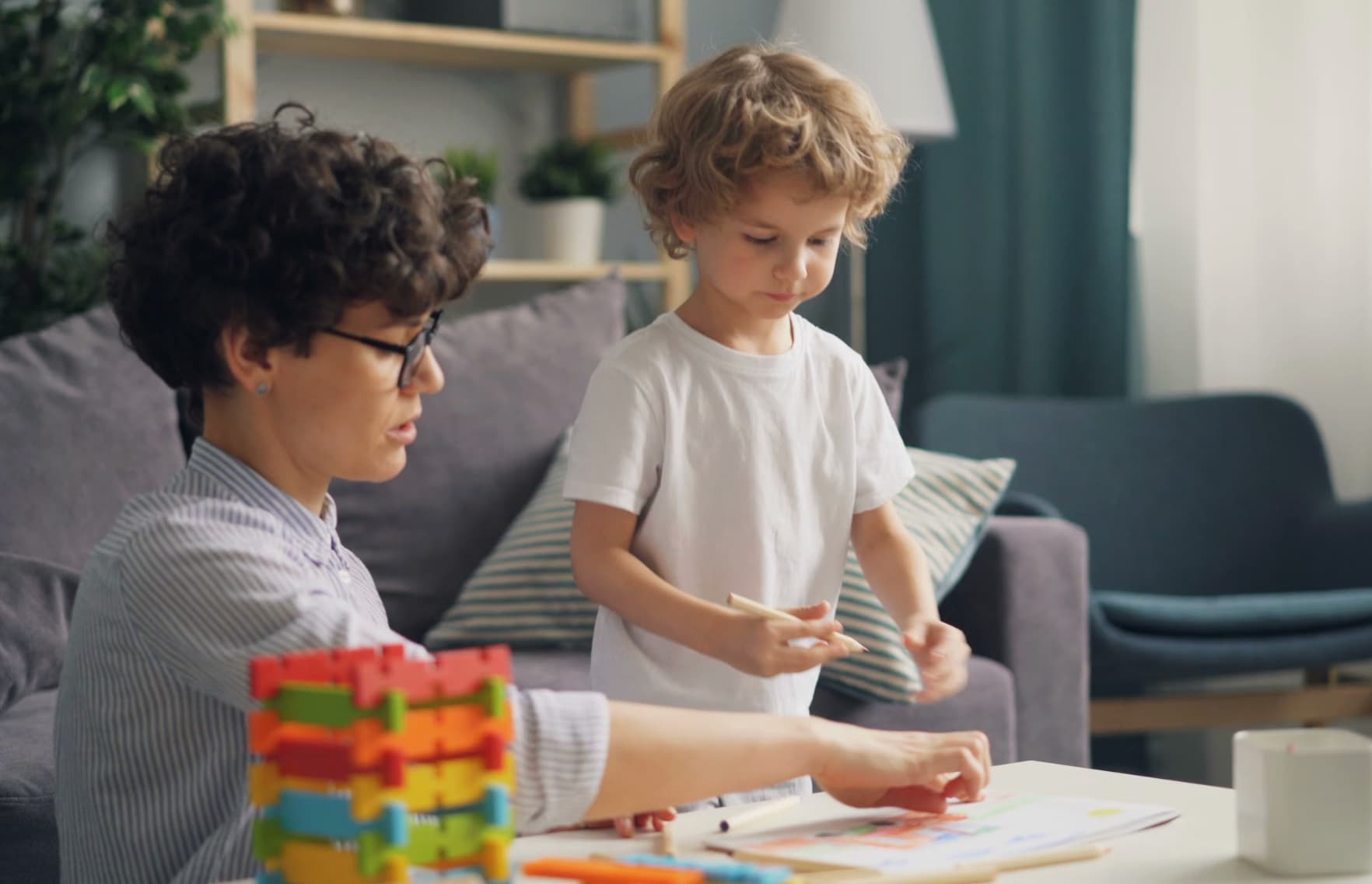
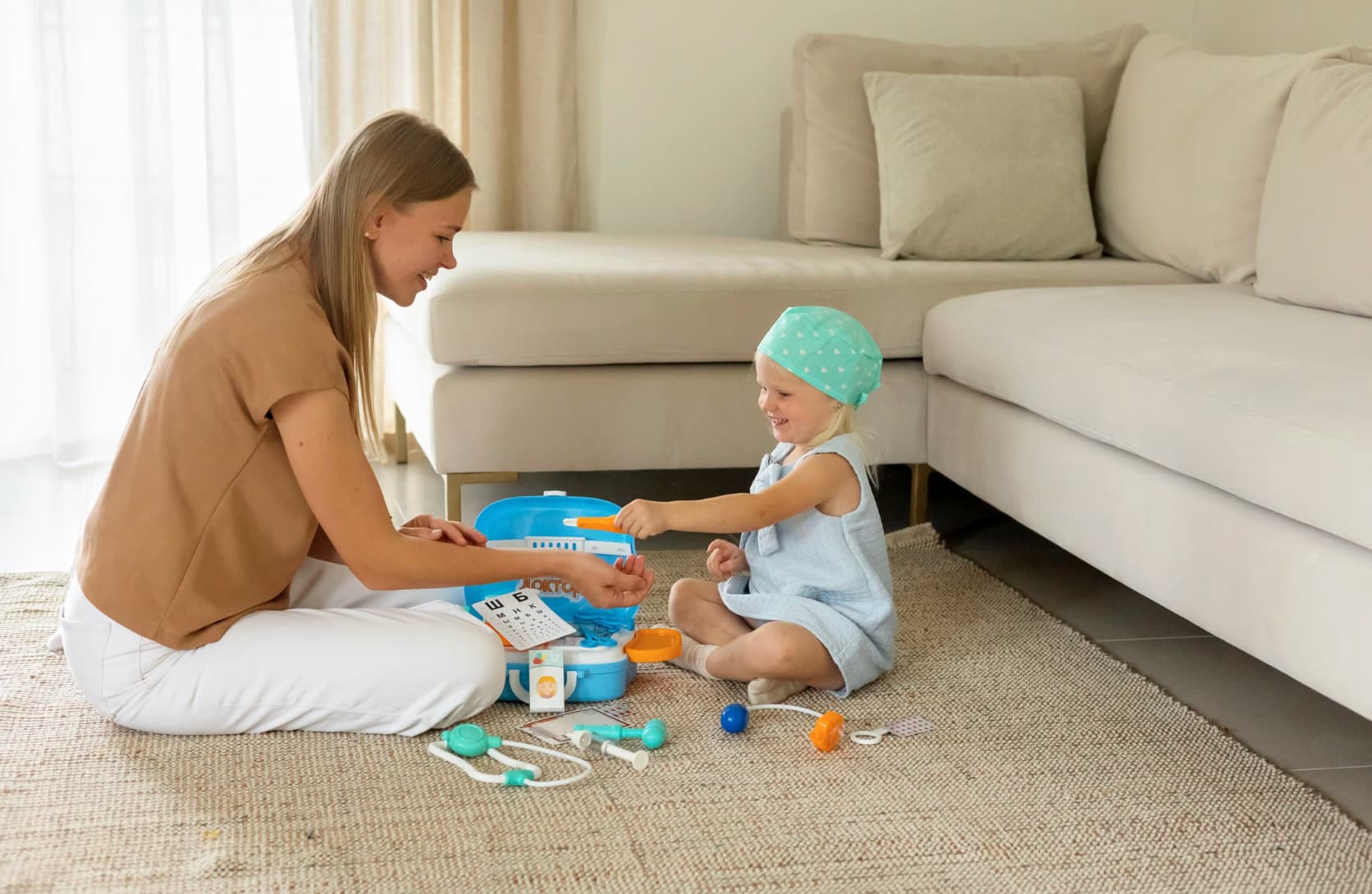
Playtime, mealtimes, bath time, and errands are all rich opportunities for this kind of learning. If your child loves playing with blocks, you can use that activity to work on color identification, taking turns, or following simple instructions, within a context that is already motivating for your child. The key is following your child's lead and inserting gentle learning moments naturally, rather than forcing a structured interaction.
Your BCBA can show you exactly how to use naturalistic teaching strategies in a way that aligns with your child's current goals. Watching your therapist model these techniques during in-home sessions is one of the best ways to learn them.
A Simple Framework for Daily Support
While parents should never feel pressure to replicate what a trained therapist does, having a loose framework for daily support can be helpful. Here is a simple, parent-friendly approach:
- Check in with your BCBA regularly. Stay up to date on which skills are being targeted and how things are progressing. Ask questions and share what you are noticing at home.
- Set up your environment. Make the home a calm, predictable, and reinforcement-rich place where your child feels safe and ready to engage.
- Look for natural teaching moments. Use everyday routines and activities to give your child low-pressure opportunities to practice skills.
- Reinforce consistently. When your child uses a target skill, acknowledge it immediately and positively. Consistency between therapy and home is one of the biggest predictors of progress.
- Respond to challenging behaviors as directed. Follow the guidance your BCBA has given you for how to respond when difficult behaviors arise. Consistency here matters just as much as it does for reinforcing positive ones.
What Parent-Implemented ABA Actually Looks Like
Parent-implemented ABA does not mean parents become therapists. It means parents become informed, consistent, and intentional in how they interact with their child at home. The clinical work, assessment, data collection, and program development all remain firmly in the hands of your BCBA and therapy team. What parents bring is something no therapist can provide: constant presence, deep knowledge of their child, and the ability to create dozens of practice opportunities every single day. This is why in-home ABA therapy is so powerful. When therapists and parents work side by side in the same environment where learning needs to happen, progress tends to be faster and more meaningful.
Partner With a Team That Supports You Too
At Supportive Care ABA, we believe that the best outcomes happen when families and therapists work together as a team. Our BCBAs provide hands-on parent training and coaching as part of every in-home therapy program, so you always know what you can do to support your child and how to do it well.
If you are ready to get started or want to learn more about how our home ABA therapy guide for parents works in practice, we would love to hear from you. Reach out to Supportive Care ABA at (317) 936-1240, email us at info@supportivecareaba.com, or visit supportivecareaba.com/contact-us to take the first step. Your child's progress is a team effort, and we are here to be part of it.







.jpg)

