
ABA Strategies for Parents at Home in Lee's Summit and Independence, MO
Want to help your child practice skills at home? See how our BCBAs coach Lee’s Summit and Independence parents through everyday routines.


ABA Strategies for Parents at Home in Lee's Summit and Independence, MO
Short on Time? Here's a Quick Summary
- Coaching from expert-led BCBA’s shows parents how to use ABA when their child struggles most.
- Extra practice at home means more turns for your child to try things solo.
- Parent coaching is part of our at-home ABA services.
Where does your child learn the most? Most parents would say school or therapy. Fair enough. But a lot of learning also happens in places nobody plans for, like the kitchen at 7:15 when one sock has gone missing, or the car when your child wants the same song a fourth time.
At Supportive Care ABA, we try not to overlook those moments. Parent and caregiver training is built around them. When families call about ABA parent training in Lee's Summit, MO programs, they're rarely after something huge. Usually, they'd just like their child to handle one more part of the day without an adult stepping in. And they want to know where to start.

What Parent Coaching With Our Team Involves
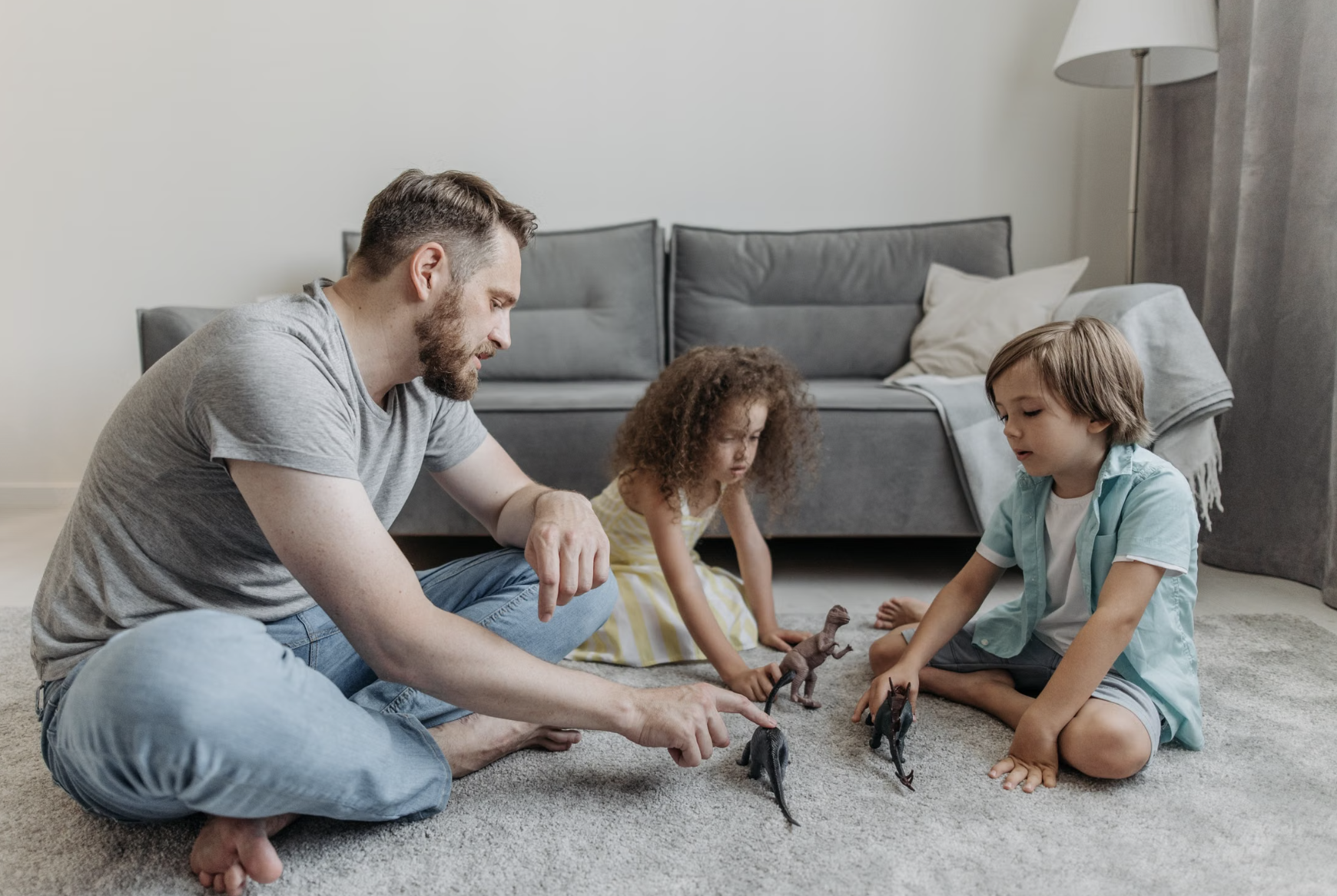
Coaching usually happens on the living room rug, or at the kitchen table, or wherever your child has decided to be that afternoon.
Your child's Board Certified Behavior Analyst (BCBA) goes first, trying a strategy with your child while you watch. Then you have a go. You'll get small pointers along the way, which might sound like: "Wait one more second before you help." "Praise right there, the moment the shoe goes on."
You might fumble the wording, or notice the good moment just after it's passed. Most parents say that eases up within a few weeks.
Bit by bit, the ABA therapy methods we use start to feel less like a script. One short direction replaces the three you used to rattle off in a row. If a task is too big for your child, your BCBA will help you find where to break it up.
Because we coach in your home, your BCBA sees what a clinic can't. Towels hung just out of reach. A heap of shoes by the front door. Those details go straight into the plan.
Why So Much Independence Grows at Home
Your child's therapist is around for part of the week. You're around for nearly all of it, school runs and late dinners included.
If you borrow the approach our team uses, learning keeps going on the days we aren't there. A skill your child worked on Tuesday afternoon can come up again at dinner. Give it until Saturday, and you might spot it on the playground too.
Progress tends to come from that sort of plain, daily repetition. Rarely from one big breakthrough.
So what counts as independence? It depends. For a four-year-old, getting cereal into the bowl (and not onto the counter) can feel like a big deal. An older child may be working on asking for a break before things fall apart. Your BCBA can help you sort out which goals make sense for your child right now.

ABA Strategies for Parents at Home You Might Practice With Us
Chances are, these routines already fill your days. Next to each one is a strategy you might learn how to practice with your BCBA.
Getting dressed
Strategy: Backward chaining (you do the early steps, your child does the last one).
What progress could look like: Pants pulled up alone at first, later most of an outfit.
Washing hands
Strategy: Picture cards stuck by the faucet.
What progress could look like: Every step done with no reminders from you.
Snack time
Strategy: A brief pause before handing over a favorite snack.
What progress could look like: “More” asked for with a word, a sign, or a device.
Leaving the house
Strategy: “First, then” phrases, like “First shoes, then park.”
What progress could look like: Less arguing at the door.
Cleaning up
Strategy: A two-minute timer and quick praise.
What progress could look like: Blocks in the bin before the timer goes off.
Your BCBA shows you each one first. Then you practice together until you’re the one leading.

Parent Training in Action: Backward Chaining and the Jacket Problem
Is the jacket a fight every morning? Then this one's worth a try.
You start by doing almost all of it. Both arms into the sleeves, zipper hooked, pulled nearly to the top. Your child does the last inch, and you praise it immediately. When that last pull is easy, your child takes on the step before it too.
It works backward on purpose. Each attempt ends with your child getting it right. Kids who finish on a good note usually don't mind having another go the next morning. Several weeks on, a child who once fought every sleeve may need only a small hand with the zipper.
Inside One Coaching Visit
Visits vary. Many follow a pattern something like this:
- Your BCBA asks how the week went.
- You pick a routine that's been hard lately.
- The BCBA tries a strategy with your child.
- You try it and get quick feedback.
- Together, you choose one thing to work on before the next visit.
Grandparents, Siblings, and Sitters Can Learn It Too
Odds are, you're not the only adult in your child's week. Grandpa might do Wednesday pickup. An older sibling could be watching bath time while you get dinner on. Then there's the sitter on date night.
Caregiver training for autism that Missouri families ask about can include any of these people. Children figure out fast which adult is most likely to give in. When everyone uses similar words and responses, the rules get much easier for your child to follow.
Our BCBA can also write up a summary of the strategies, which helps if Grandma only visits on weekends. Siblings sometimes like learning how to cheer a skill on during play.
Parent Training in Lee's Summit, Independence, and Jackson County
Our Missouri team works with families all over the Kansas City area. That includes ABA therapy that Lee's Summit parents can schedule at home. We also offer ABA parent training that Independence, MO families can fit around school and work.
Parents searching for autism support for parents in Jackson County, MO usually mention how full their weeks already are. Speech therapy on Monday, a school meeting Wednesday, a checkup Friday. A drive to a clinic on top of all that? It can feel like too much. Our therapists come to your home, so that drive simply isn't part of it.
Autism parent training Missouri families receive from us follows the same approach in every area we serve. To check whether we cover yours, see our locations page.
Parent coaching is commonly part of an ABA treatment plan. MO HealthNet covers ABA for Missouri children with autism who meet medical necessity criteria. We look into your benefits before services begin, so you know where things stand on cost from the start.
About availability: What settings we can offer your child will depend on the treatment plan and your location. Staffing levels, Missouri requirements, and insurance approval play a role as well.
Try This Before Your Next Session
- Give one routine your attention for a week. Add a second only after that.
- Name the skill when you praise.
- Before bed, write down something that went right, no matter how small.
- Had a rough Monday? Skills often come back within a few days.
- Keep your questions in your phone's notes app for the next session.

Questions From Missouri Parents
1. Do I need any background in ABA?
No. Your BCBA explains things in plain words, shows you first, then lets you try.
2. How often does parent coaching take place?
It depends on your child's treatment plan and what your insurance authorizes. Your BCBA will go over a schedule with you after the assessment.
3. Can I watch my child's regular sessions?
Yes. Plenty of parents learn a lot that way. Seeing the RBT use a strategy makes it easier to copy later.
4. What if a strategy doesn't suit our family?
Tell your BCBA. Plans change based on what works in your home, so switching things up is expected.
5. Will parent training make my child more independent?
It gives your child far more practice than sessions alone. Families often notice small things first, like a sock pulled on without help or a request made in words. When those changes show up, they differ from child to child.
6. Can our pediatrician send a referral?
Yes. Your child's doctor can refer your child directly. Someone from our intake team will call you after that.

Tell Us About Your Mornings (or Your Bedtimes)
Most parents know right away which part of the day is hardest. Sometimes it's getting everyone out the door. Sometimes it's that long hour before lights out. Whichever it is in your house, start there. We'd be glad to hear about it.
Call us for a free consultation:
Phone: (317) 563-0845
Email: info@supportivecareaba.com
Or fill out our contact form on our website, and we'll call you back. If you'd rather get started now, you can begin your intake online.


